
I’ll be honest—your ten-year-old wedding cake *might* be edible, but it probably won’t taste great. Freezer burn, moisture loss, and flavor degradation are nearly guaranteed after a decade, even with perfect wrapping. Your best bet? Store it in your freezer’s back (away from the door) at a steady 0°F, wrapped in plastic and foil. When you’re ready to eat it, thaw slowly in the fridge for 24 hours. Or skip the gamble and order a fresh anniversary cake instead. Want the specifics on wrapping techniques and what actually happens to buttercream over time?
Is Your 10-Year-Old Wedding Cake Actually Worth Eating?
Why would anyone keep a wedding cake in the freezer for a decade? I get it—it’s sentimental. But here’s the honest truth: that ten-year-old slice probably isn’t worth eating.
Even with perfect wrapping and stable freezing, your cake’s facing serious challenges. Flavor decline is almost guaranteed, and freezer burn can make textures grainy and disappointing. Cream cheese frostings dry out. Delicate decorations turn brittle or disintegrate.
I’m not saying it’s unsafe (it’s not), but taste and quality? Those suffer substantially over ten years. That pristine frosting you froze? It won’t taste how you remember.
Rather than gambling on nostalgia, consider baking a fresh anniversary cake instead. You’ll actually enjoy eating it, and you’ll still honor that special moment without disappointment.
Choose a Cake Type That Survives 10 Years of Freezing
If you’re determined to actually eat that cake a decade later, you’ll want to have chosen wisely from the start. I’ve learned that denser cakes with sturdy buttercream frosting survive the freezer far better than delicate, airy layers. Here’s why: oil-based cakes retain moisture longer than butter-based ones, while buttercream frosting holds up reasonably well during extended storage (though it’ll soften slightly).
Avoid fruit fillings and high-moisture cakes—they’re freezer burn magnets. Your frozen cake’s worst enemies are texture changes and drying out. The good news? Proper wrapping matters tremendously. Tight plastic wrap, foil, and an airtight container keep your cake protected.
That said, I’ll be honest: a miniature replica or fresh recreation beats a decade-old slice. But if you’re committed, choosing the right cake type makes all the difference.
How to Wrap Wedding Cake for a Decade of Freezer Storage
I’ve found that wrapping your cake properly is honestly the difference between a delicious anniversary treat and a freezer-burned disaster, so here’s what actually works: you’ll want to flash-freeze it uncovered for about two hours first, then layer on two rounds of plastic wrap, multiple layers of foil, and newspaper to create four total wrap cycles (yes, it looks like a mummy, but trust me). Once it’s wrapped like Fort Knox, stash it in the back of your freezer—that stable, out-of-the-way spot where the temperature won’t fluctuate every time someone hunts for ice cream—and leave it undisturbed for your whole decade of storage.
Layering And Wrapping Technique
Proper wrapping is honestly the difference between cake that tastes like your wedding day and cake that tastes like your freezer, so let’s get this right. Start by removing your frozen cake from its cardboard box and wrapping it in two layers of plastic wrap. This creates your first moisture barrier. Next, alternate four cycles of foil and newspaper—this combo insulates like nothing else. Finally, seal everything with two more foil layers for maximum protection. I learned the hard way that skipping steps leads to freezer burn, which nobody wants after waiting a decade. Store your wrapped masterpiece toward the freezer’s back where temperatures stay most consistent. Trust me, this layering technique transforms your cake from a potential disaster into a perfectly preserved time capsule.
Long-Term Freezer Placement Strategy
Now that your cake’s wrapped like a protective cocoon, placement matters just as much as the wrapping itself—maybe even more. I’ve learned that your freezer’s geography is essential. You’ll want to store your cake deep in the back, away from the door where temperature swings happen constantly. Think of it like real estate: back is premium, front is trouble.
| Location | Temperature | Risk | Ideal? |
|---|---|---|---|
| Door shelves | Fluctuates wildly | High thawing | No |
| Top tier | Warmer zone | Moisture exposure | No |
| Deep freeze back | Stable, cold | Minimal | Yes |
| Side walls | Moderate | Some variation | Maybe |
| Bottom rear | Most stable | Protected | Ideal |
This placement strategy keeps your top tier anniversary cake in excellent condition for that special decade milestone.
Keep Your Freezer Cold and Stable: Location Matters
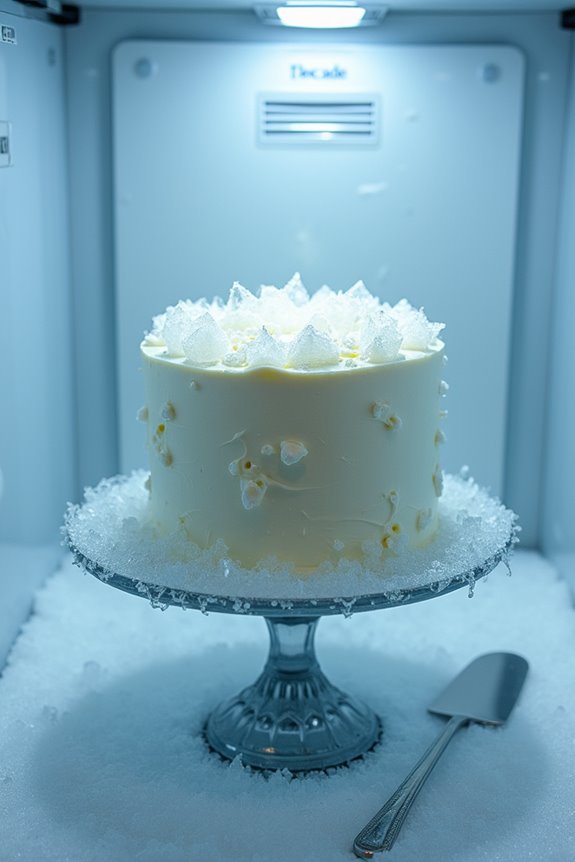
Your freezer’s stability is your cake’s best friend—I learned this the hard way when a faulty thermostat turned my perfectly preserved slice into an icy disappointment. You’ll want to keep that freezer locked at 0°F (-18°C) or colder and stash your cake toward the back, far from the door where temperature swings happen every time someone grabs ice cream. Have a backup plan for power outages too (maybe know where your neighbor keeps dry ice), because even a few hours of warmth can mess up a decade of careful storage.
Consistent Temperature Control Essential
How’d you like to unwrap your wedding cake a decade later only to find it’s crystallized into something resembling an ice sculpture?
I learned that consistent freezer temperature is your best friend here. You’ll want to maintain a steady 0°F (-18°C) because temperature swings cause ice crystals to form, ruining that precious texture. Here’s what I monitor:
| Factor | Target | Why It Matters |
|---|---|---|
| Freezer Temperature | 0°F (-18°C) | Prevents ice crystal damage |
| Location | Away from door | Reduces temperature fluctuations |
| Thermometer | Reliable model | Catches dangerous spikes |
| Airflow | Avoid vents/coils | Prevents localized warming |
I check my freezer thermometer weekly because even small temperature fluctuations invite freezer burn. Position your cake deep inside, away from the door where warm air sneaks in during those constant openings. That stability keeps your cake wedding-day perfect.
Back Of Freezer Placement
When it comes to freezer real estate, the back is where your wedding cake belongs—far from the door’s temperature swings and closer to the cold core where things stay consistently frozen. I’ve learned this the hard way (trust me, you don’t want a thawed cake disaster). Your wedding cake top layer specifically needs this prime real estate because it’s sentimental and irreplaceable. Every time you open that freezer door for ice cream or frozen pizza, warm air rushes in. The back stays protected from these temperature fluctuations. Keep your cake away from vents and ice-makers too—they’re troublemakers that’ll expose your precious tier to unwanted humidity. Position it strategically, and you’re joining the ranks of couples who actually enjoy their decade-old cake.
Power Outage Contingency Planning
What happens to a decade-old wedding cake when the power cuts out—and you’re not home to notice? I learned the hard way that contingency planning isn’t optional—it’s essential. Here’s what I recommend: invest in a backup generator or secure access to a secondary freezer nearby. During an outage, keep your freezer door sealed; an unopened unit stays safe for two to three days if properly wrapped. I keep mine away from exterior walls and doors, which minimizes temperature swings when disaster strikes. Your cake’s survival depends on steady cold, so I’ve made it my mission to maintain continuous low temperatures. It sounds excessive (and maybe it is), but after ten years of anticipation, you’ll appreciate the peace of mind when you finally slice into that preserved memory.
How Buttercream, Fondant, and Fillings Change Over Time
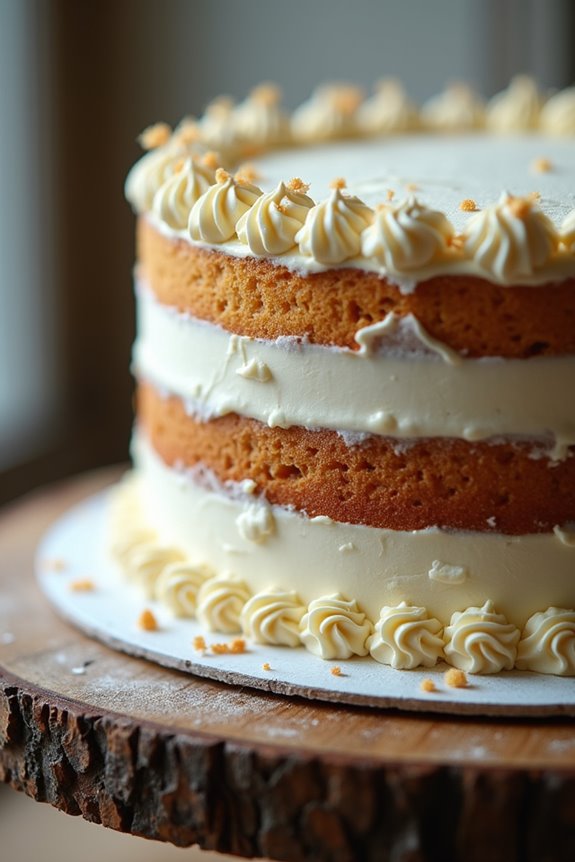
Because your wedding cake’s toppings and fillings are basically doing their own science experiment in the freezer, they won’t look or taste quite the same after a decade. I’ve learned this the hard way.
| Component | What Happens | How Long It Lasts |
|---|---|---|
| Buttercream | Softens and loses structure | 6-8 months well |
| Fondant | Develops dry, leathery texture | 1-2 years decent |
| Ganache | Changes texture notably | 3-4 months okay |
| Fruit Fillings | Become mushy and separated | 2-3 months tops |
| Pudding-Based | Holds up relatively better | 4-6 months stable |
Buttercream’s biggest problem is that freezing weakens it. When you thaw everything out, that once-fluffy frosting turns into mush. Fondant cracks and shrinks. Your fillings? They’ll likely taste stale, with possible freezer burn flavoring everything. I’d recommend eating yours sooner rather than later.
Thaw Your Cake Slowly: The 24-Hour Rule
Now comes the part where patience becomes your secret weapon—I’ve learned this the hard way after nearly ruining a decade-old cake slice by thawing it on the counter like it was last night’s leftovers. You’ll want to move your frozen cake to the refrigerator for a full 24 hours, keeping it wrapped the entire time so it doesn’t dry out or get that sad freezer-burn look. Once those 24 hours are up, let it sit at room temperature for about an hour before cutting, which’ll wake up the flavors and give you that texture you remember from your wedding day (minus the cake-in-your-face moment, hopefully).
Refrigeration Overnight Process
Slow thawing in your refrigerator is genuinely your best friend when it comes to preserving that decade-old cake’s texture and flavor. I’m talking about planning ahead—really ahead. You’ll want to move your frozen cake from the freezer to the fridge and let it sit there undisturbed for a full 24 hours. This refrigeration overnight process might test your patience (I know it tested mine), but it’s worth it. The gradual temperature change allows moisture to redistribute evenly throughout the layers, preventing that dry, crumbly disaster we’re all trying to avoid. Keep the cake wrapped or containerized during this thaw to protect the frosting from drying out. Trust me, this slow approach beats any shortcut you’re tempted to try.
Room Temperature Finalization
What’s the final step after your cake’s spent a full day lounging in the fridge? Now comes the room temperature finalization—the crucial bridge between your frozen cake and actually eating it.
Here’s what I’d recommend:
- Remove your cake from the fridge and let it sit at room temperature for roughly 1 hour
- Keep it loosely covered to prevent it from drying out while flavors mellow
- Resist the urge to unwrap it completely—patience pays off
- Monitor how it feels; you’re looking for that perfect texture restoration
During thawing, your cake’s crumb and moisture will shift slightly. That’s normal and actually good—it means flavors are developing. I’ve learned the hard way that rushing this final step ruins everything you’ve preserved. Trust the process, and you’ll genuinely enjoy that slice of nostalgia.
When Your Frozen Wedding Cake Has Gone Bad
if you’ve kept that wedding cake in your freezer for a decade, it’s probably not going to taste like you remember. Even with perfect wrapping and stable temperatures, frozen cake deteriorates significantly over time. You’ll likely encounter freezer burn, moisture loss, and staleness that’ll make you wonder why you saved it (been there). Buttercream frosting fares worse than oil-based varieties, breaking down faster and developing off-flavors. The cake itself becomes dry and loses its original texture, making each bite disappointing rather than nostalgic. While spoilage isn’t typically a safety issue, the experience won’t match your expectations. Instead of risking disappointment, consider ordering a fresh mini anniversary cake from your original baker or recreating the flavor profile entirely. Your taste buds—and your memories—deserve better.
Expect Flavor Loss: But It’s Still Likely Edible
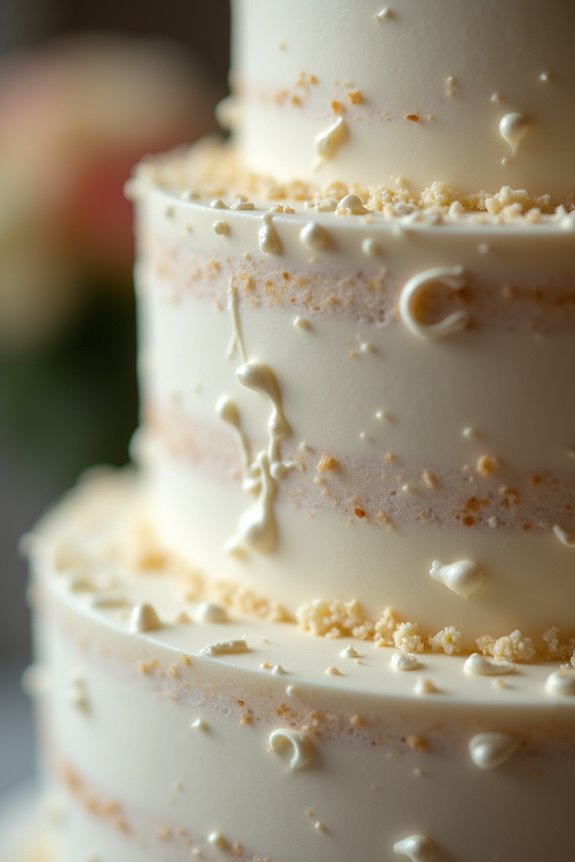
That ten-year-old wedding cake sitting in your freezer is almost certainly still safe to eat, even if it won’t taste like you remember. Here’s what you’re actually looking at:
- Flavor diminishment – Your frozen wedding cake will taste noticeably less vibrant than day one
- Texture changes – Buttercream and moist fillings don’t freeze well over decades
- Edible status – No spoilage means it’s still technically safe to consume
- Denser cakes fare better – Drier textures hold up longer than cream-based options
I won’t sugarcoat it (pun intended): your cake won’t knock your socks off taste-wise. But here’s the reassuring part—you’re joining countless couples who’ve successfully eaten their decade-old slices without incident. Experts confirm that proper wrapping and consistent freezer temperatures keep it edible, even if the magic’s faded a bit.
Order a Fresh Anniversary Cake Instead
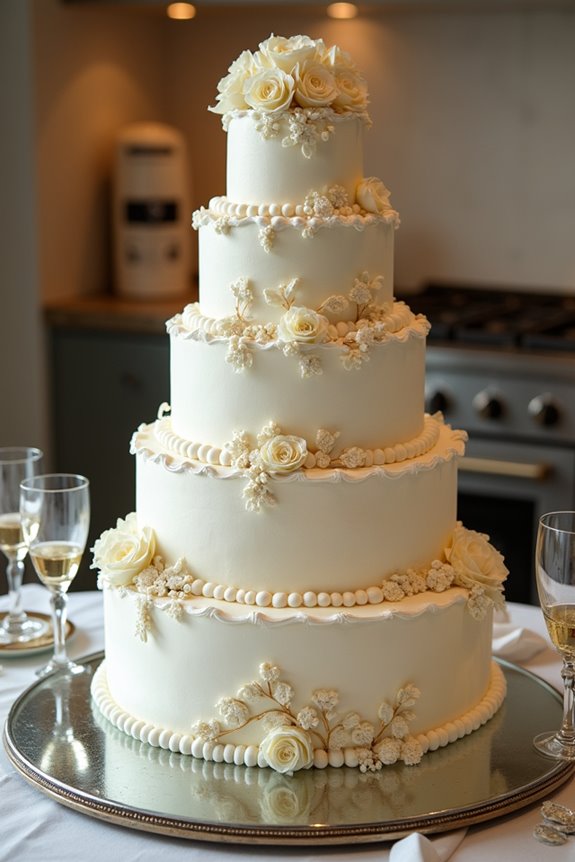
Rather than gambling on a decade-old slice, you’ve got a smarter option: ordering a fresh anniversary cake. I’d recommend reaching out to your original bakery—they’ll often recreate your wedding design for your first anniversary or milestone celebration. You’ll get that same visual magic without the freezer-burn gamble.
Here’s what makes this approach brilliant: a fresh anniversary cake tastes like, well, actual cake. No texture loss. No flavor degradation from years of ice crystals doing their thing. Your baker can even modernize the design or swap in vegan options if your preferences have shifted since the wedding day.
You’re essentially getting the best of both worlds—honoring your wedding memories while actually enjoying dessert that doesn’t taste like cardboard.
Ask Your Baker About Preservation vs. Recreating Your Cake
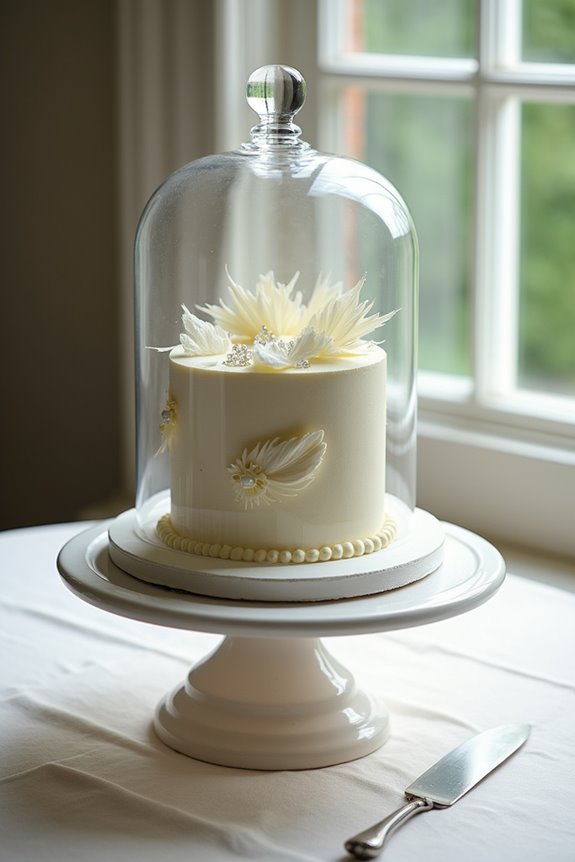
Why not ask your baker directly—they’re basically the expert on keeping cake alive for a decade?
Your baker can guide you through two practical options:
- Preservation techniques: Request specific wrapping methods (plastic wrap, then foil) and whether an airtight container suits your cake’s needs.
- Cake type matters: Buttercream and moist cakes degrade faster during freezing, while denser varieties hold up better.
- Thaw timeline: Most bakers recommend 24 hours in the fridge, then brief room-temperature sitting before eating (patience pays off).
- Recreation option: Consider ordering a fresh anniversary cake or mini replica instead of gambling with decade-old preservation.
This conversation saves you from cake disappointment. Your baker knows their work’s limitations and can honestly say whether freezing makes sense or if recreating captures that magic better.