

Traditionally, the bride’s family covers engagement party costs, though modern couples often split expenses or fund the whole thing themselves—it really depends on your situation and who’s doing the planning. The key? Talk openly about money upfront (awkward, I know). Whether you’re splitting with family, friends, or going solo, document contributions in writing to avoid surprises later. Guest contributions are optional, but you can ask folks to cover their own meals if budgets are tight. There’s actually a smart framework for handling this that’ll save you stress.
How Much Should Your Engagement Party Cost?

How much should you actually spend on celebrating your engagement? I’ve learned that engagement party costs depend entirely on your guest count and priorities. Here’s what I typically see: venues run $2,000 to $10,000, food and beverages average $15–$20 per person, and décor ranges from $1,000 to $3,000 (though DIY options save money). You’ll likely spend around $1,000 on rentals unless your venue includes them. Entertainment—think a DJ for $700–$1,000—is optional but fun.
I’d suggest setting your total budget first, then working backward. Decide your guest list, because that number drives everything else. You’re not alone if finances feel overwhelming; most people find sweet spots between $5,000 and $15,000. Start with what feels comfortable, then adjust individual categories accordingly.
Who Traditionally Pays for Engagement Parties?
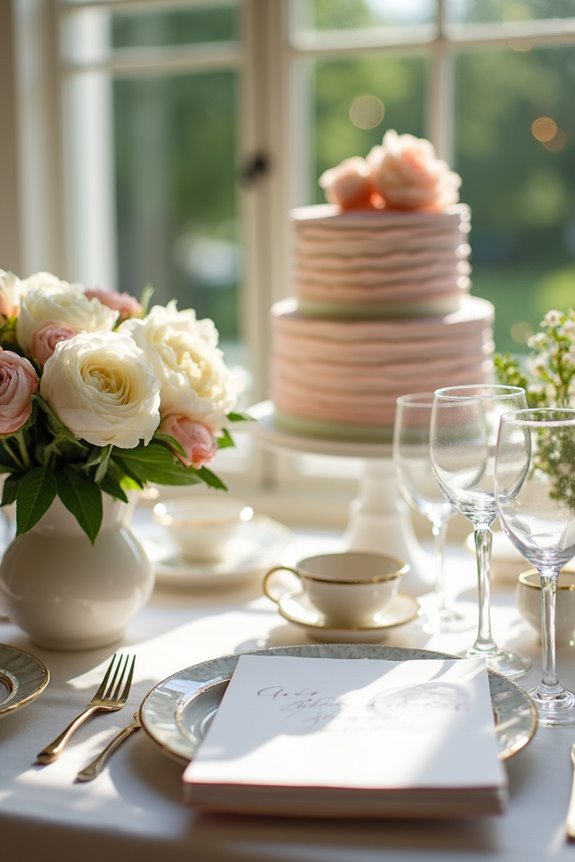
Who’s actually supposed to foot the bill for this celebration? Traditionally, the bride’s family covers engagement party costs, along with other pre-wedding expenses. The groom’s family historically handles the rehearsal dinner instead. However, I’ve noticed these traditional funding arrangements have shifted considerably.
Today’s family contributions look different. Some couples split engagement party costs with their families, while others shoulder the entire expense themselves. Your specific situation depends on financial capacity and cultural expectations within your own family.
Here’s what matters most: communicate openly about who’s paying. When parents host, they often cover most costs, though the couple or friends might contribute. You don’t need to follow outdated rules—just decide what works for everyone involved and move forward together.
The Couple: Hosting and Funding Your Own Celebration

Taking charge of your own engagement party lets you shape the celebration exactly how you want it—and honestly, it’s becoming increasingly popular. When you and your partner fund the event yourselves, you’re calling the shots on everything from venue to guest list.
Here’s what couple funding gives you:
- Complete creative control over theme and style
- Freedom to choose your budget without outside pressure
- Flexibility to host whenever feels right
- Ability to incorporate personal touches that matter
- Option to surprise guests with unique elements
Cost sharing between partners works smoothly when you discuss expectations upfront. Maybe one person handles venue research while the other manages catering. You’re building something together, so splitting responsibilities—not just bills—makes planning feel collaborative rather than stressful. This approach transforms your engagement party into a genuine reflection of your relationship.
Parents: When Family Takes the Lead

When your parents step up to host your engagement party, you’re looking at a celebration that’s often more intimate and traditionally flavored than what you might’ve planned yourselves. Your parents taking lead typically means a smaller guest list and a budget split that reflects their preferences and financial comfort. They’ll likely handle the venue selection, decor, and catering decisions—basically the heavy lifting. Here’s the thing: you don’t have to sit passively. Contributing financially or actively participating in planning shows respect for their effort while ensuring your voice matters. Maybe you cover the beverages while they manage the food. This collaborative approach strengthens family bonds and makes the engagement party feel genuinely shared, not just hosted *for* you.
Friends: Organizing a Group or Surprise Party

Maybe your best friends want to throw you an engagement party—and honestly, that’s pretty great. When your crew takes the lead, engagement party costs become a shared responsibility rather than falling solely on family. Friends organizing these celebrations can choose their preferred format, whether it’s a surprise gathering or a casual home event.
When friends take the lead on your engagement party, costs become a shared responsibility rather than falling on family alone.
To manage group contributions effectively, consider these approaches:
- Split costs equally among all organizers
- Ask guests to contribute toward specific items
- Request potluck-style dishes from attendees
- Set a per-person budget guests cover themselves
- Collect voluntary donations to offset expenses
This collaborative approach reduces pressure on everyone’s wallet while celebrating your relationship with the people who matter most. Your friends get to show appreciation, and you’re surrounded by genuine support—that’s the real win here.
Why Guest Count Is Your Biggest Budget Driver

When you’re planning an engagement party, every single guest you invite hits your wallet harder than you’d expect—I learned this the hard way when I realized that adding just ten people bumped my per-person food costs from $18 to $22 each. Your venue and catering company often have minimums based on headcount, which means scaling your guest list up or down doesn’t just affect food and beverages; it fundamentally reshapes what venue you can actually afford and how many staff members you’ll need to hire. The good news is that trimming your guest list strategically—maybe focusing on close friends and immediate family instead of that whole extended network—can slash your total costs more effectively than pinching pennies anywhere else.
Per-Person Cost Impact
Your guest list is honestly the main thing that’ll make your engagement party budget either totally manageable or suddenly terrifying. Here’s why: every single person you invite directly affects your per-person cost through food, beverages, and seating.
When you’re budgeting, remember that light bites typically run $15–$20 per guest. That means:
- 50 guests = $750–$1,000 just for food and drinks
- Venue minimums often scale with headcount
- Rentals like tables and chairs multiply with more people
- Décor needs expand alongside your guest count
- Service fees frequently increase per attendee
The math gets real quick. I’ve seen budgets nearly double when guest count jumped from 40 to 75 people. That’s why nailing your guest count early—before booking anything—lets you choose venues and catering that actually fit your wallet.
Venue and Catering Minimums
Because venue and catering minimums are locked into your guest count, they’re honestly the two expenses that’ll make or break your budget. Here’s the thing: engagement party costs spike quickly when you’re juggling venue minimums and catering minimums simultaneously. Most venues run $2,000 to $10,000 depending on your guest list size. Then catering typically costs $15–$20 per person for light refreshments. So inviting fifty guests instead of thirty suddenly adds $1,000 to $1,500 in food alone. I learned this the hard way—I thought a few extra invites wouldn’t matter (spoiler: they did). The solution? Get quotes early from multiple venues. Ask explicitly about minimums. This helps you nail engagement party costs before surprise charges derail your planning entirely.
Scaling Your Guest List
The math is pretty straightforward: add ten people to your guest list, and you’re not just adding ten meals—you’re adding ten seats, ten beverages, ten portions of cake, and potentially bumping yourself into a larger venue tier altogether. Your guest count drives everything else.
Here’s what scales with your headcount:
- Food and beverage costs per person multiply quickly
- Venue size requirements trigger higher rental fees
- Service charges and taxes compound on larger totals
- Seating and table arrangements demand more space
- Décor needs expand to fill bigger rooms
I’ve seen budgets balloon simply because someone invited “just a few more people.” The venue costs alone can jump thousands when you cross certain guest thresholds. Start small, nail down your core group, then expand thoughtfully. Your budget—and your sanity—will thank you.
Breaking Down Venue, Food, and Beverage Costs

Your venue choice and food budget will eat up most of your engagement party funds, so I’d recommend tackling these two categories first before you worry about the rest. You’re looking at somewhere between $2,000 to $10,000 for a venue depending on where you live and how fancy you want to get, plus another $15–$20 per guest for food and drinks (which adds up faster than you’d think). The good news is that you’ve got real options here—borrowing a friend’s backyard, choosing a restaurant’s private room, or going the potluck route can slash costs without making your guests feel like they’re at a budget party.
Venue Pricing and Selection
How much should you actually spend on a venue for an engagement party? I’d recommend budgeting between $2,000 and $10,000, depending on your guest count and location. Here’s what influences your venue pricing and budget planning:
- Guest count: Larger parties need bigger spaces, driving up engagement party costs
- Location: Urban venues typically cost more than suburban options
- Included services: Some places offer food and setup, reducing extra expenses
- Amenities: Built-in decor or outdoor spaces justify higher pricing
- Day and time: Weekday events often cost less than weekend celebrations
The venue you pick essentially determines your entire budget. I’ve learned that choosing a spot with included services—even if slightly pricier upfront—actually saves money overall. You’ll want to compare what’s bundled versus what you’ll pay separately before committing.
Food and Beverage Budget
What’s really going to eat up your engagement party budget? Food and beverage budgeting. I’ve found that per-guest pricing typically runs $15–$20 for light bites and refreshments, which honestly adds up fast when you’re hosting fifty people (that’s $750–$1,000 right there). You’ll want to decide early whether you’re doing a casual appetizer spread or a more substantial meal situation. I recommend calculating your guest count first, then multiplying by that per-guest range. This gives you a realistic engagement party costs baseline before you start imagining fancy charcuterie boards. Consider what fits your crowd—cocktail-style works great for budget-conscious folks, while seated dinners cost more. The key? Know your numbers upfront so you’re not shocked later.
Cost-Saving Strategies
Once you’ve mapped out that food and beverage spend, it’s time to get strategic about where you can actually trim costs without making your party feel cheap. I’ve found that smart engagement party costs reductions come from knowing which corners to cut.
Here’s where I’ve saved money during budget planning:
- Host at someone’s home or backyard instead of renting a venue
- Skip the DJ—create a playlist and use a $150 PA system
- DIY decorations using seasonal flowers and string lights
- Serve appetizers and punch rather than full meals ($15–$20 per guest stays reasonable)
- Borrow tables and chairs from friends instead of renting
These cost-saving strategies don’t sacrifice fun. You’re simply being intentional about where your engagement party costs go. That’s smart planning, not stingy planning.
Where Your Money Goes: Decor, Entertainment, and Rentals
Ever wonder why engagement party budgets seem to balloon faster than you’d expect? I’ve learned that decor, entertainment, and rentals consume most of your engagement party costs. Let me break down where your money actually goes.
| Category | Budget Range | Money-Saving Tip |
|---|---|---|
| Decor | $1,000–$3,000 | DIY centerpieces |
| Entertainment | $150–$1,000 | Curated playlist |
| Rentals | $1,000 avg. | Borrow or bundle |
Decor budgeting typically runs $1,000 to $3,000, though DIY options slash expenses considerably. Entertainment ranges from a $700+ DJ to a simple $150 PA system paired with your playlist. Rentals average around $1,000, but here’s the insider secret: many venues include tables, chairs, and linens in their packages. Borrowing from friends works too. These three categories drive most engagement party costs, so prioritizing what matters most helps you stretch every dollar.
How to Talk to Family About Paying for the Party

You’ll want to start this conversation early with your partner before looping in anyone else, because figuring out your own budget together prevents awkward surprises later (trust me, nobody likes finding out Dad’s already hired a DJ). Once you’re on the same page, reach out to potential helpers with a straightforward question—”Would you like to contribute to the engagement party?”—that makes it crystal clear there’s no pressure involved. After that, get specific about what you’re asking for: decide whether someone’s covering drinks, another person’s handling the cake, or if you need straight-up cash donations, then document it all so everyone knows exactly what they’ve committed to.
Starting the Conversation Early
How do you bring up money without sounding like you’re asking for a handout? Start the conversation privately with your partner first. You’ll want to figure out your budget and vision together before looping in family. Then, approach parents or close friends with genuine openness about engagement party contributions.
Use gentle framing that invites participation without pressure:
- “Would you like to contribute to the party?”
- “What amount feels comfortable for you?”
- “Could you help with a specific aspect?”
- “What’s realistic given your current situation?”
- “How can we make this work together?”
Clarifying budgeting conversations early prevents confusion later. You’re not demanding anything—you’re simply creating space for family involvement. Most people appreciate the chance to participate in meaningful ways. Setting clear expectations now means everyone feels respected and connected to celebrating your engagement.
Setting Clear Financial Boundaries
Once you’ve had that initial conversation with your partner about what you want and what you can afford, it’s time to get specific with the people who’ll be footing the bill. I’ve learned that vague promises like “we’ll figure it out later” create chaos (trust me on this).
Instead, clearly define who’s covering what: Is someone paying for the venue? The catering? The decorations? Be explicit about engagement party costs and set firm contribution limits. Tell potential helpers something like, “We’d love your support, but we’re capping this at $500.”
This transparent approach to budgeting prevents financial surprises and keeps family contributions from spiraling. When everyone knows their role and boundaries upfront, you’re not just planning a party—you’re building trust.
Splitting Costs Fairly When Multiple Hosts Are Involved

When several people want to throw an engagement party together, figuring out who pays for what can get messy fast—I’ve seen friendships tested over whether someone owes $47 or $50.
You’ve got solid options for splitting costs fairly:
- Even split: Divide total expenses equally among all hosts
- Contribution-based: Each host covers costs matching their planning effort
- Hybrid method: Couple handles venue and food; parents/friends cover decorations and entertainment
- Itemized approach: Assign specific elements to different hosts upfront
- Written budget: Document who pays what before spending begins
I recommend the hybrid or itemized methods—they prevent resentment because everyone knows exactly what they’re funding. When you’re splitting costs with multiple hosts, clear budget planning transforms potential conflict into genuine teamwork. It’s worth that awkward five-minute conversation now.
Do Engagement Party Guests Need to Contribute?

Should guests chip in for an engagement party? Here’s my take: it’s optional, though asking for contributions makes sense when engagement party costs are high.
I’ve found that clear communication prevents awkwardness. You might request guests cover their own meals or chip in for shared expenses like drinks. Another approach? Present several venue options and let majority preference guide your choice—this way, guests help shape the budget.
Cost-sharing works best when it’s voluntary and transparent from the start. I always tell guests upfront rather than springing surprises later. Think of it like this: hosting doesn’t obligate you to fund everyone’s dinner (trust me, I’ve learned this the hard way).
The key is honesty. When you communicate expectations clearly, everyone feels comfortable and included.
Written Agreements That Prevent Misunderstandings

How do you keep everyone on the same page about money without things getting messy? I’ve learned that written agreements are your best friend when managing engagement party budgeting. Trust me, a text thread isn’t enough (I learned that the hard way).
Here’s what I recommend documenting:
- Specific expenses each person covers (venue, food, decorations, entertainment)
- Dollar amounts or percentage splits for contributors
- Payment deadlines and methods
- Total budget limits to prevent surprises
- Who handles each task and timeline
Getting explicit contributions in writing prevents those awkward conversations later. I ask people directly: “Would you like to contribute, and what amount works for you?” Then I write it down—email, group chat, doesn’t matter. This simple step protects your budget and keeps your relationships intact.