
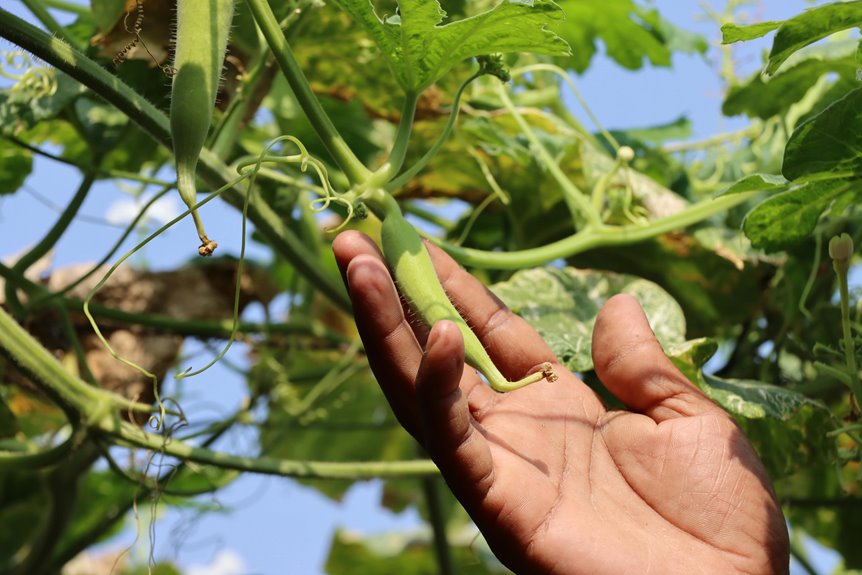
Okra doesn’t always need a trellis, but it usually needs *something*. Most varieties grow 5–8 feet tall with heavy pods that’ll topple without support. I stake standard varieties around week 4–6, using simple stakes and soft ties near the base. Dwarf varieties like Lee stay compact and self-supporting, so you can skip staking entirely. Tall varieties? Those definitely need stakes or trellises. Proper spacing matters too—keep rows three feet apart for airflow. There’s more to know about timing, mistakes to avoid, and adjustments you’ll need to make.
Do You Really Need to Support Your Okra?
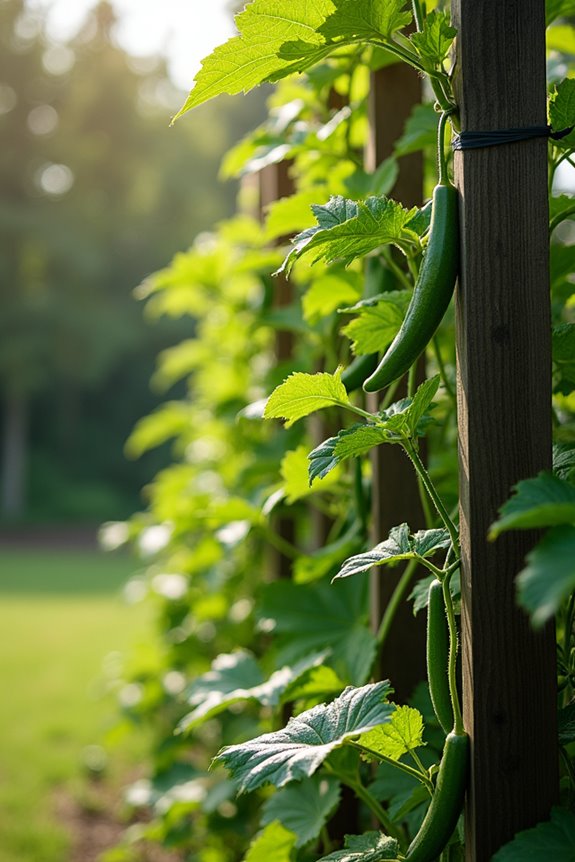
Why do your okra plants keep toppling over? I’ve been there, watching my once-proud plants collapse after a windy afternoon. The truth is, okra can shoot up to 8 feet tall, and when those heavy pods develop, they’re basically asking for trouble without proper support.
You don’t absolutely need trellising, but I’d strongly recommend it. Stakes driven 6 inches from the base work wonderfully and cost almost nothing. I’ve also had success with tomato cages around smaller varieties. The real benefits go beyond preventing falls—support improves air circulation around your plants, which keeps diseases at bay. Plus, harvesting becomes genuinely easier when you’re not crouching under drooping branches.
Trust me, spending a few minutes on support now saves headaches later.
How Tall Does Okra Grow? And When to Stake It
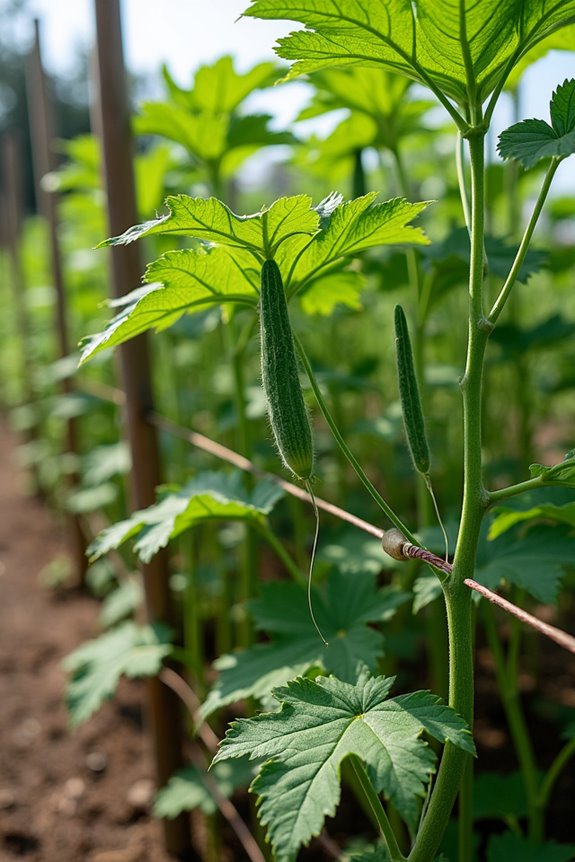
Just how tall will your okra plants get? I’ve found that most varieties reach between 5 to 8 feet, though some ambitious ones stretch even higher. Here’s what I’ve learned about height and staking timing:
| Variety Type | Expected Height | Staking Time | Support Needed |
|---|---|---|---|
| Standard | 5-6 feet | 4-6 weeks | Medium stakes |
| Tall varieties | 7-8+ feet | 3-4 weeks | Heavy-duty trellis |
| Dwarf | 3-4 feet | Optional | Light support |
| Heirloom | 6-8 feet | Early | Strong stakes |
I stake my okra once it reaches about 12 inches tall. This prevents problems later when heavy pods develop. Drive stakes 6 inches from the base and use soft ties—you’re supporting growth, not strangling it. Trust me, planning ahead saves frustration when your plants start towering.
Self-Supporting Dwarf Varieties (Skip Staking Entirely)
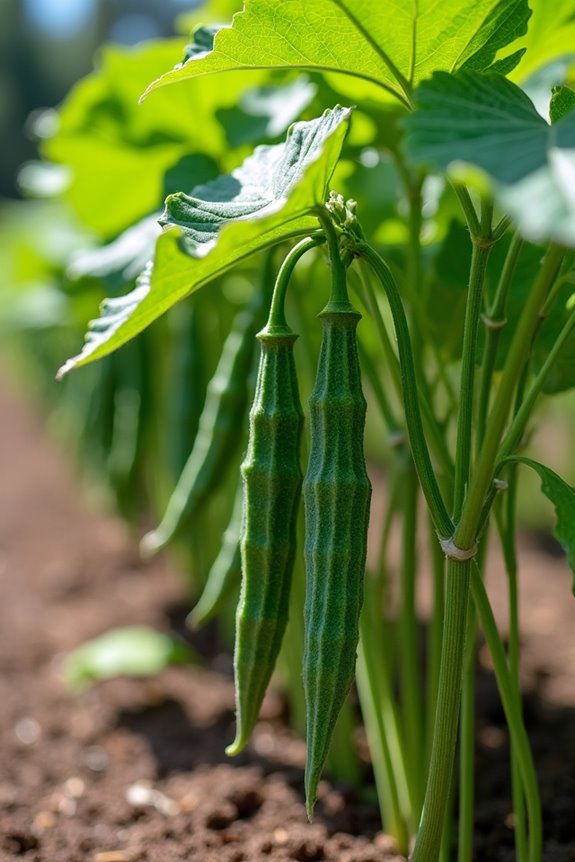
If staking and trellising sound like more work than you’re willing to take on, dwarf okra varieties might be exactly what you need. I’ve found that compact growth varieties like Lee stay short and sturdy, eliminating the trellis setup altogether. These self-supporting plants won’t topple over in wind or collapse under heavy pods—they’re built for independence, frankly.
You’ll still want adequate spacing and air circulation to prevent disease, but staking unnecessary means less hassle. I’ve grown dwarf varieties in small gardens and containers without any support structures, and they thrived. Sure, you can gently tie them if they become top-heavy (it happens), but honestly, it’s rarely required. Choosing dwarf varieties simplifies everything—more time enjoying okra, less time building infrastructure.
Taller Varieties and When They Need Stakes
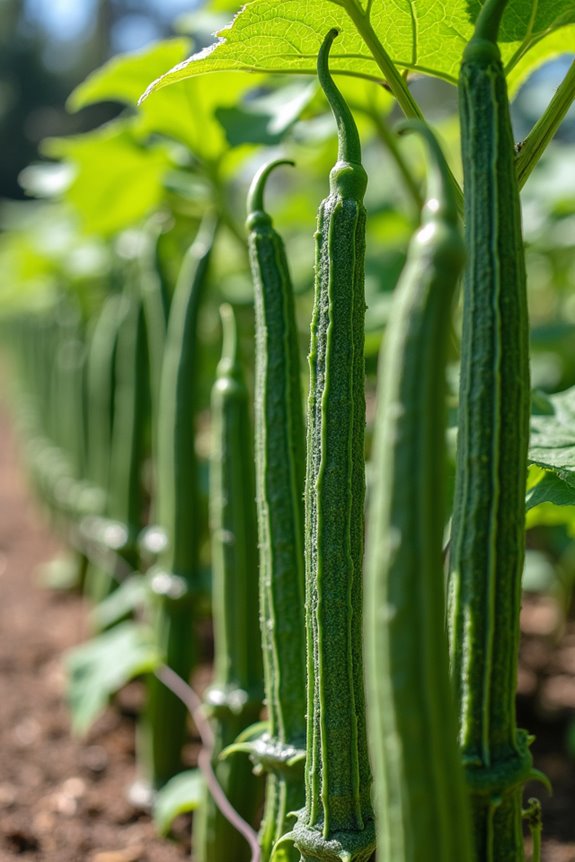
How do you know when your okra’s gotten too tall for its own good? When your taller varieties reach 6–8 feet or more, they’ll need stakes to stay upright. I’ve learned that supporting the main stem prevents toppling and guarantees a healthy harvest.
Here’s what I do:
- Drive stakes about 6 inches from the plant base for stable anchoring
- Tie the main stem with soft cloth strips to avoid damage
- Monitor ties as growth occurs throughout the season
- Consider Tom Cast cages for all-around support on extra-tall varieties
- Adjust your tying plants strategy as they develop
Tying plants properly keeps them standing strong. Think of stakes as your okra’s safety net—they’re not fancy, but they work. You’ll feel confident knowing your investment’s protected from wind and weather.
Simple Staking Methods: Stakes, Cages, and Trellises
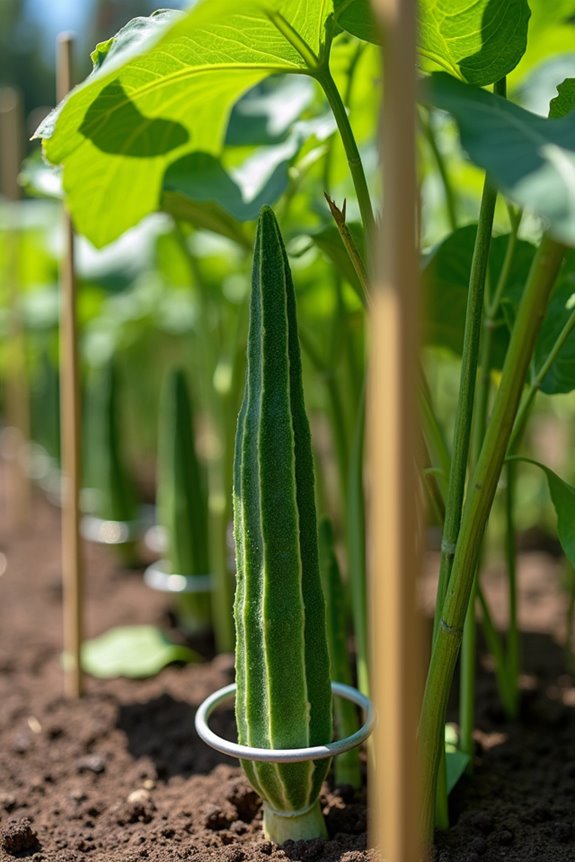
I’ve found that the best staking method really depends on your okra’s height and growth habits, so you’ll want to pick from individual stakes, cages, or trellis systems based on what works for your garden. Simple wooden or bamboo stakes driven 6 inches from the plant’s base give you direct control over the main stem’s vertical growth, while tomato cages offer all-around support without much fuss (though they work better for shorter varieties). If you’re growing the taller types that’ll eventually reach 6–8 feet, a string trellis system between two sturdy posts gives you the best coverage and keeps your plants upright as those pods start weighing things down.
Individual Stakes For Height
When your okra plants shoot up to 5 or 8 feet tall—or beyond, if they’re feeling particularly ambitious—a simple stake becomes your best friend. I’ve learned this the hard way after watching mine topple like dominoes during a summer storm.
Driving a stake just 6 inches from your plant’s base gives you a direct support point for managing that main stem as it grows. Here’s what makes staking so effective:
- Prevents wind and rain damage that can devastate tall varieties
- Guides vertical growth while maintaining air circulation around foliage
- Costs less than building a full trellis system
- Works perfectly for space-conscious gardeners
- Keeps your support simple and straightforward
Use soft ties or cloth strips when securing your stem, avoiding anything that’ll girdle the plant. You’re protecting your investment while keeping things manageable.
Cage And Trellis Systems
Why settle for just one support method when you’ve got options that work even better? I’ve found that tomato cages give your okra all-around support, keeping those pods safely off the ground and preventing annoying toppling disasters. They’re basically foolproof (I appreciate that).
String trellis systems between sturdy posts are my go-to for taller varieties. They guide vertical growth beautifully while maintaining the airflow your plants crave. I’ve learned that choosing between cages and trellises depends on your plant height and variety—no one-size-fits-all answer exists here.
Both methods keep your okra supported without restricting airflow, which honestly matters more than you’d think. Whichever system you choose, you’re joining a community of gardeners who understand that proper support means healthier, more productive plants. Trust me on this one.
How to Stake Okra Without Damaging Stems
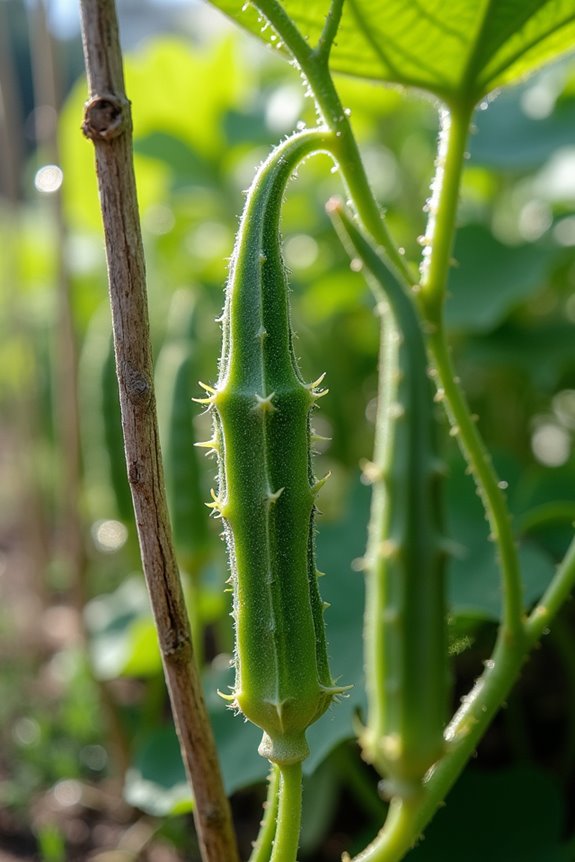
Supporting your okra plants doesn’t have to be complicated, and honestly, it’s easier than you’d think. When I started staking my okra, I learned that proper technique prevents costly stem damage.
Proper okra staking technique prevents costly stem damage and doesn’t have to be complicated—it’s easier than you’d think.
Drive sturdy stakes six inches from your plant base—this gives your okra a solid backbone as it grows tall. Here’s what works:
- Position stakes before plants get too large
- Use soft ties or cloth strips to secure stems gently
- Avoid wrapping ties too tightly around the main stem
- Check ties monthly as plants thicken
- Replace worn ties before they girdle stems
Tie the main stem loosely, leaving room for growth. I think of it like a gentle hug rather than a chokehold. This staking method keeps your okra upright while protecting it from damage, ensuring a healthier harvest for your garden community.
When to Stake Okra: High Winds, Heavy Pods, and Poor Soil
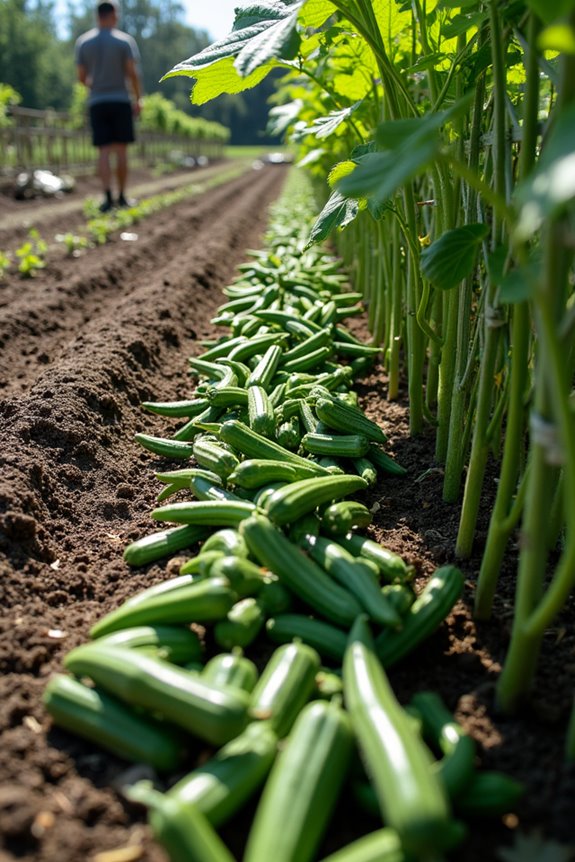
How do you know if your okra actually needs staking? I’ve learned that three main factors determine whether you should grab that trellis or stakes. First, check your weather patterns. If you’re in a region prone to high winds or heavy rain, your okra will almost certainly topple without support. Second, observe your plants’ growth. When those heavy pods start weighing down branches, gravity wins every time. Third, assess your soil quality. Poor, compacted soil won’t anchor roots firmly enough to handle tall plants reaching 5 to 8 feet. I recommend staking proactively rather than waiting for disaster. Sturdy stakes driven 6 inches from the base or a simple string trellis between posts prevents frustration later.
Space and Space Your Okra for Better Airflow
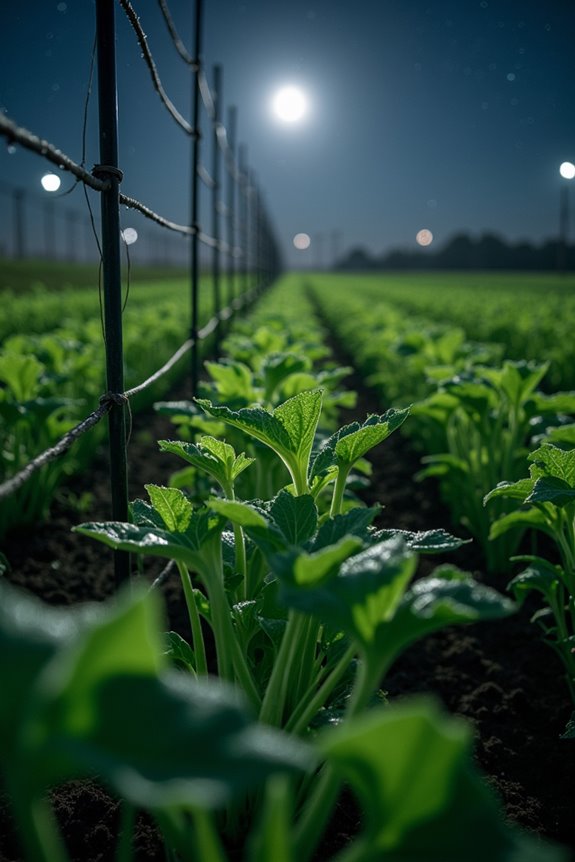
I’ve learned that spacing your okra plants isn’t just about giving them room to grow—it’s about keeping them healthy and productive. When I pack plants too close together, I’m basically creating a humid, stagnant environment where fungal diseases love to throw a party, so I make sure to space rows at least 3 feet apart (or give each plant 12–18 inches when using stakes) to let air flow freely around that tall canopy. Your arrangement matters too: whether you’re staking individual plants or letting them grow naturally, proper spacing prevents disease and keeps your okra standing strong without looking like a crowded apartment building.
Spacing Requirements for Airflow
Why does spacing matter so much when you’re growing okra? I’ve learned that proper okra spacing airflow directly impacts your success. When I space my plants at least 3 feet apart without a trellis, I notice fewer fungal problems and healthier pods production.
Here’s what I’ve discovered works best:
- Thin seedlings to one plant every 12–18 inches to prevent crowding
- Maintain air circulation around plants by avoiding overcrowding
- Space rows generously for easier harvesting and garden hygiene
- Support taller varieties with sturdy structures to preserve airflow
- Watch fungal issues decrease dramatically with better ventilation
I thin my seedlings religiously (it feels tedious initially, I admit). This single step prevents the dense jungle effect that invites disease. When you give your okra plants room to breathe, they reward you with consistent, abundant harvests. Trust me—your future self will thank you for this spacing discipline.
Preventing Fungal Disease Issues
When you’ve got okra plants growing shoulder-to-shoulder in your garden, you’re basically rolling out a welcome mat for fungal diseases like powdery mildew and Fusarium wilt. I’ve learned this the hard way (trust me, it’s not fun). Here’s what I do now: I space my okra at least three feet apart to maximize air circulation. When I use an okra trellis with stakes or string methods, the plants stay upright and foliage dries faster after watering. This matters because moisture on leaves invites fungal trouble. I also water only at soil level, never overhead. Finally, I prune dense growth regularly to keep airflow moving. These trellising methods and spacing strategies work together, creating an environment where fungal disease simply can’t gain a foothold.
Plant Arrangement Best Practices
How much space does your okra really need to thrive? I’ve learned that giving plants breathing room makes all the difference. When I space my okra rows at least 3 feet apart, air circulation improves dramatically, and honestly, harvesting becomes way easier.
For plant arrangement, I consider these essentials:
- Spacing rows 3+ feet apart prevents fungal nightmares and keeps plants healthy
- Using sturdy supports or stakes maintains upright growth without toppling
- String trellises between posts accommodate your okra’s 5–8 foot height beautifully
- Tomato cages work well for fuller support around each plant
- Regular tie adjustments prevent stem constriction as plants grow
I’ve discovered that proper spacing and reliable supports aren’t luxuries—they’re necessities. Your okra arrangement directly impacts disease prevention, airflow, and yield. Trust me, taking time upfront saves headaches later.
Avoid These Common Staking Mistakes
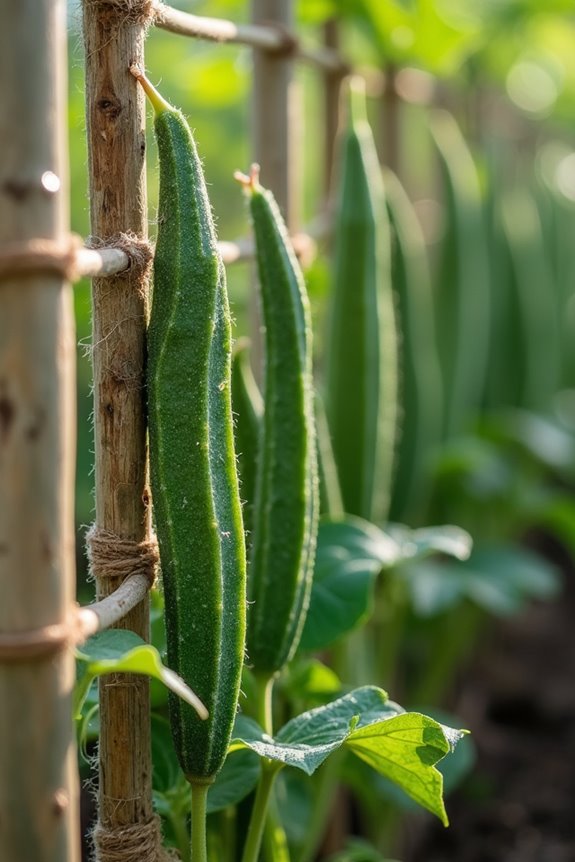
The difference between a thriving okra plant and a toppled mess often comes down to one thing: doing the staking right. I’ve learned this the hard way. First, don’t tie your support system too tight—I once cinched mine so snugly the stem couldn’t expand, and that was a rookie mistake. Second, avoid placing your stake too close to the base; six inches out gives roots room to breathe and grow. Third, don’t skimp on adjustments. As your plant grows taller, you’ll need to add ties and reposition supports to maintain proper air circulation. Finally, resist the temptation to use wire or thin string—it’ll cut into stems. Soft cloth ties work beautifully. These small tweaks make all the difference.
Check and Adjust Your Stakes as Okra Climbs
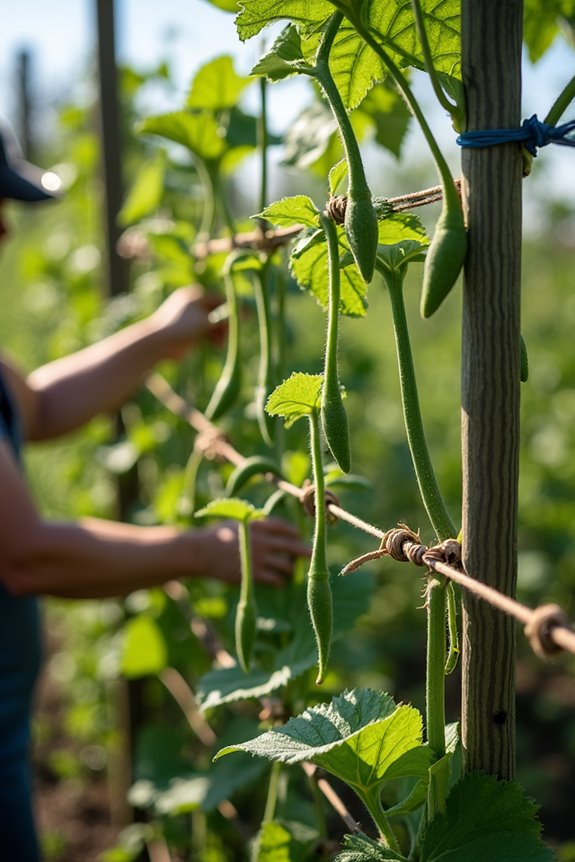
Your okra’s growth spurt will surprise you—seriously, one week it’s knee-high and the next it’s towering over your shoulder. That’s why I check my stakes every two weeks during peak growing season. Here’s what I do to keep everything standing tall:
- Loosen ties gently before they strangle your stems
- Inspect stakes for wobbling and secure loose ones immediately
- Add extra support when plants reach 4+ feet
- Adjust your trellis system to guide new growth upward
- Replace worn soft ties before they damage bark
I’ve learned the hard way that waiting too long to adjust support means watching plants topple overnight. Your okra depends on consistent maintenance. By regularly checking and tightening ties around the main stem, you’ll prevent damage and encourage straighter, healthier growth. Trust me, this small effort pays off.