
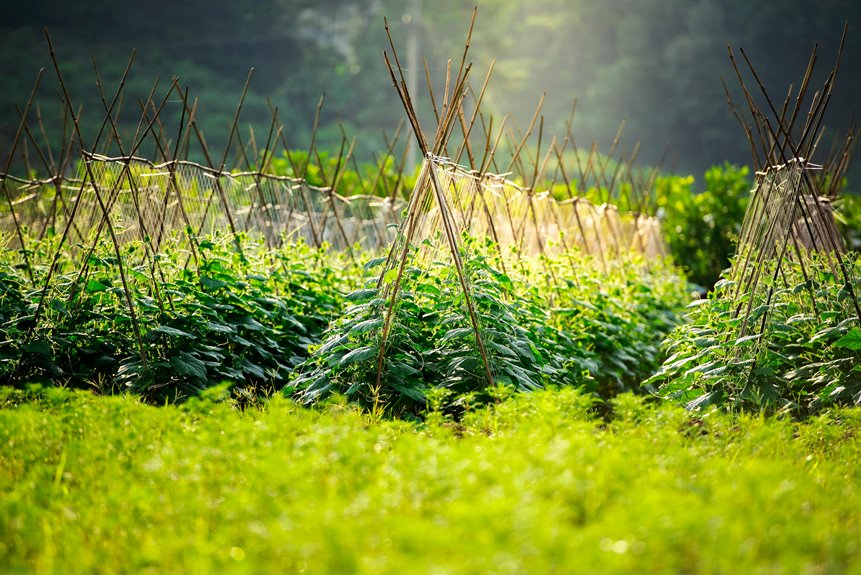
Build your cucumber trellis 6 to 8 feet tall—trust me, I’ve learned this the hard way. Shorter trellises fail by mid-July when vines sprawl everywhere, inviting pests and hiding fruit. You’ll spend summer wrestling vines instead of harvesting. Taller structures boost airflow, prevent disease, and let you grab cucumbers at chest height without bending constantly. Use sturdy materials like wooden frames with wire or metal structures, anchor them well against wind, and guide vines upward from the start with soft ties. The right height transforms everything about your harvest.
6–8 Feet: The Ideal Cucumber Trellis Height
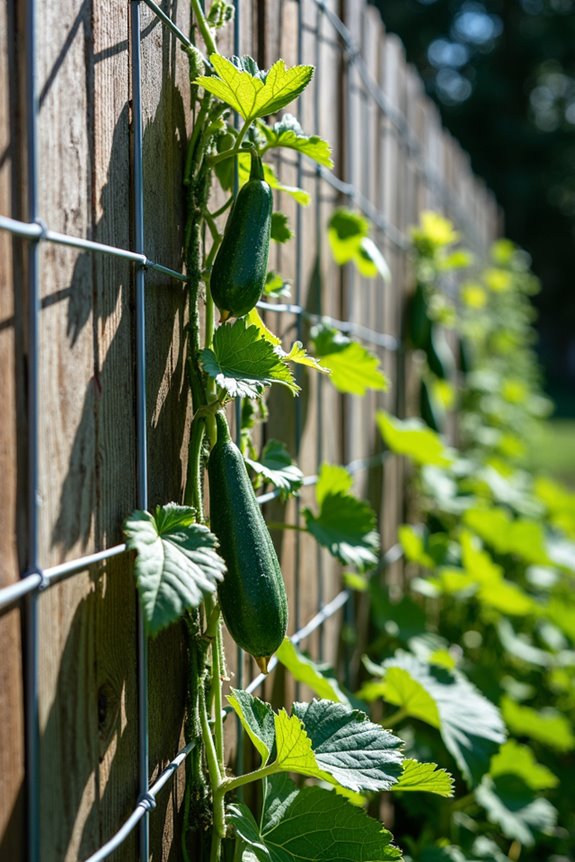
So how tall should you actually go with a cucumber trellis? I’ve found that 6 to 8 feet hits the sweet spot for most growers like us. This installation height works because it gives your vertical cucumbers plenty of room to climb without making harvesting feel like mountaineering. I started with a shorter setup once (mistake noted), and I spent way too much time bending down for fruit hidden near the base.
The beauty of this trellis height range is balance. You get real vertical growth that saves garden space, yet you can still reach ripe cucumbers without a ladder. Your vine varieties will thrive with this much headroom. I’ve noticed that hitting this installation height means less wrestling with tangled vines and more actual harvesting time—which, honestly, feels pretty rewarding.
Why Height Matters: Better Airflow, Easier Harvest
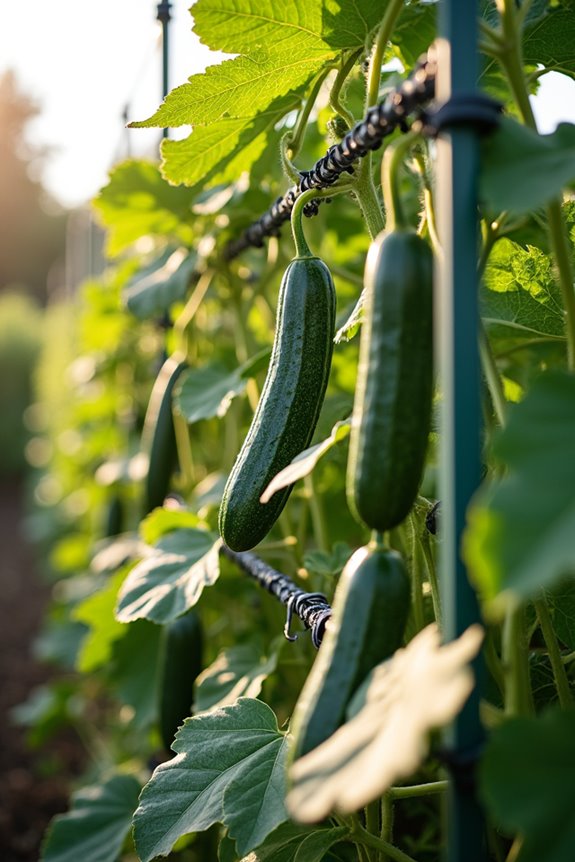
Why does height matter so much when you’re growing cucumbers vertically? I’ll tell you—it’s the difference between a thriving garden and one that struggles with mildew and mystery diseases.
| Benefit | Impact | Your Garden |
|---|---|---|
| Airflow | Prevents fungal diseases | Healthier plants |
| Harvest | Less bending required | Easier picking |
| Sunlight | Better fruit development | Cleaner produce |
When I increased my trellis height to 6 feet, I noticed my plants’ leaves dried faster after watering. That airflow? It’s your secret weapon against powdery mildew. Plus, harvesting cucumbers at chest height beats crawling on the ground (trust me on this one). Taller structures keep fruit elevated and clean, sparing you from grimy harvests. The right height transforms your entire growing experience.
Choosing the Right Materials for Sturdy Support
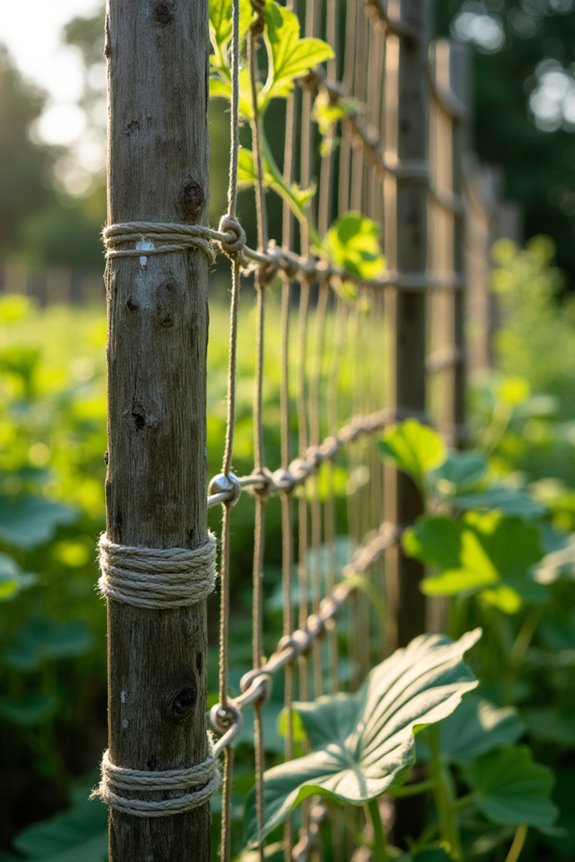
What’ll hold up your cucumber plants without collapsing under their weight? You’ll want sturdy materials that won’t quit midseason. I’ve learned that the right choice makes all the difference between a thriving garden and a frustrating failure.
The right trellis choice makes all the difference between a thriving garden and a frustrating failure.
Consider these reliable options:
- Wooden frames with wire or twine supports – affordable, easy to customize, and naturally blend with your garden aesthetic
- Metal structures – durable steel or aluminum that withstand years of use and heavy vine loads
- Coated PVC panels – lightweight yet stable, perfect if you’re tired of rust concerns
For stability, ensure whatever you choose is well-anchored to the ground. Wind and the weight of mature cucumber vines can topple poorly secured trellises (trust me, I’ve seen it happen). Wooden or metal supports both work great—just pick what fits your budget and garden style.
Build a Stable Trellis Frame
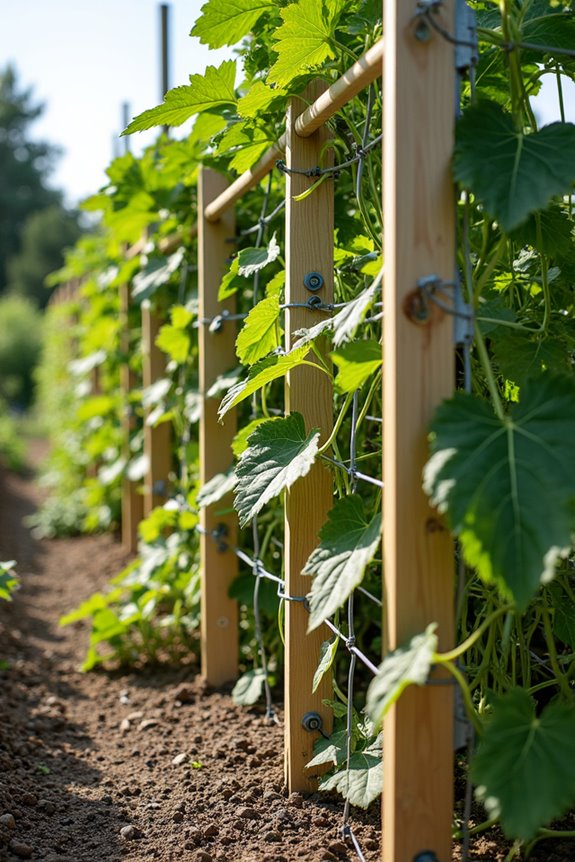
Now comes the part where you actually construct something that won’t topple over mid-August—and honestly, this is where most folks mess up. I’ve learned that a stable trellis frame needs proper anchoring and cross-bracing to handle climbing vines and heavy fruit.
| Material | Best For |
|---|---|
| Wood | Traditional, affordable |
| Metal | Maximum durability |
| PVC | Weather resistant |
| Coated metal | Long-lasting choice |
| Composite | Low maintenance |
Your trellis frame should reach 6 to 8 feet high, giving cucumbers room to climb while keeping harvest accessible. Use sturdy connections throughout, and don’t skimp on ground anchors. I’ve seen flimsy setups fail spectacularly. Check your joints regularly as plants grow heavier. Think of it as preventative maintenance that saves frustration later.
Anchor Your Trellis Against Wind and Weight
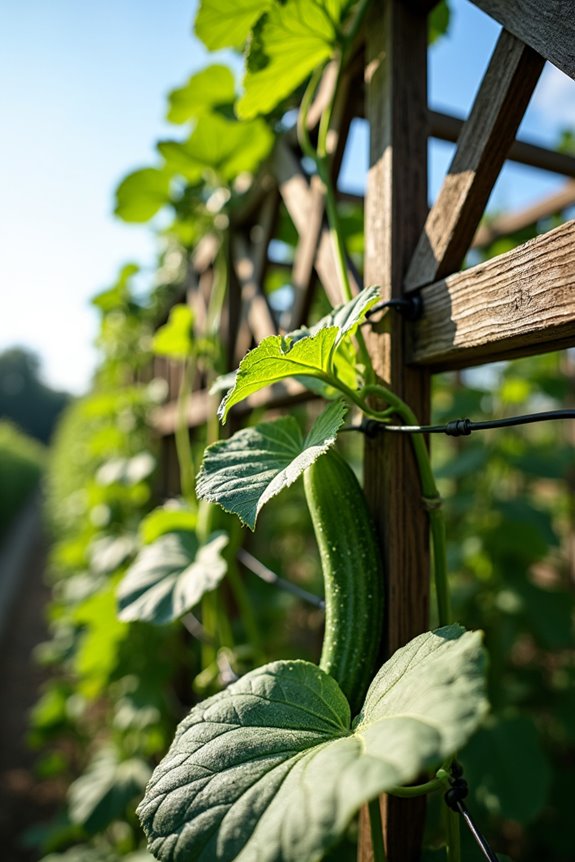
How do you keep a six-foot tower of vines from becoming an expensive garden casualty? I’ve learned that anchoring your trellis properly makes all the difference between success and failure.
Wind and heavy fruit create real forces you can’t ignore. I anchor mine using:
Wind and heavy fruit create real forces you can’t ignore when building tall garden structures.
- Ground spikes driven deep into soil for lateral stability
- Heavy-duty posts set in concrete for permanent structures
- Guy lines attached to fence sections for extra bracing
I check my attachments regularly as vines grow heavier. This prevents catastrophic failure when fruit weight peaks. Tall trellises need additional bracing near the top, especially in windy areas. Think of your trellis like a ship’s rigging—constant tension and shifting loads demand attention. Spend time anchoring properly now, and you’ll enjoy cucumbers without worry.
Getting Cucumbers to Climb the Right Way
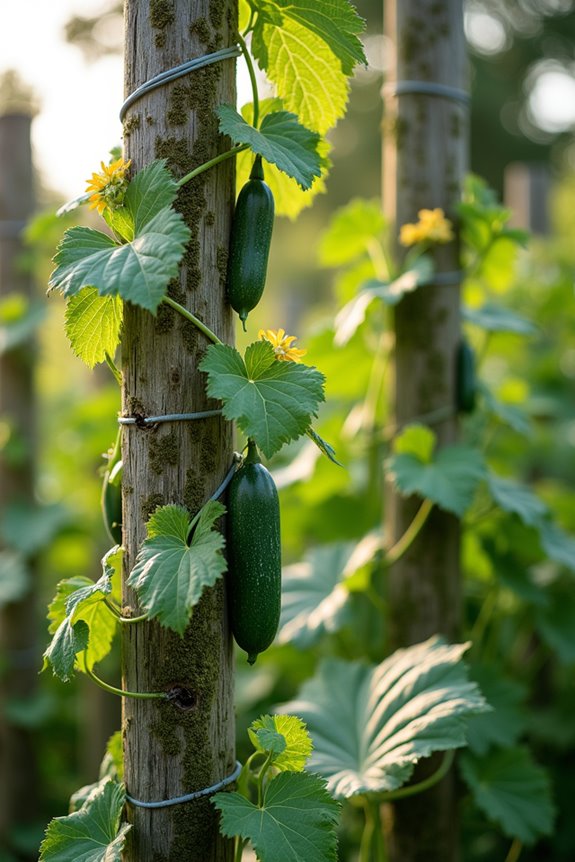
Once your trellis is standing strong against the wind and weight, I’ve found that getting your cucumber vines to actually climb it requires some intentional training—timing matters, and so does how you attach those tendrils. I’ll show you when to start guiding your vines upward and which attachment methods work best without damaging the plants (spoiler: soft ties are your friend). With the right approach, your cucumbers’ll grow vertically like champs instead of sprawling all over your garden bed.
Training Vines Onto Trellises
When should you start guiding those cucumber vines upward? I’ve found that training begins when vines reach just a few inches long and first tendrils appear. Here’s what I do:
- Use soft ties at nodes to gently guide growth without damaging tender shoots
- Check weekly to keep growth on track and prevent vines from spreading onto ground
- Tie every few inches as the vine grows, maintaining trellis contact without constraining new growth
The key is starting early. I attach my primary shoots to the trellis, encouraging upward growth so fruits hang and ripen along the structure. Since cucumbers latch onto supports naturally with tendrils, I keep my touch gentle during placement. This ongoing adjustment prevents damage and keeps everything climbing exactly where you want it.
Timing and Attachment Methods
Why do so many gardeners struggle with cucumbers that sprawl across the ground instead of climbing? Timing and attachment methods make all the difference. I’ve learned that setting up your trellis before planting—not after—prevents root disturbance and training headaches later. Start guiding vines onto the trellis when they’re just a few inches long and tendrils appear.
For attachment methods, I use soft ties at each node, giving plants wiggle room as they grow. This slack prevents damage while keeping vines secure. A trellis height of 6 to 8 feet works best for most varieties, accommodating vertical growth while keeping harvesting manageable.
Anchor everything firmly to the ground. Trust me, mature vines loaded with fruit will test your installation’s strength. Get these fundamentals right, and you’ll join the club of gardeners enjoying vertical cucumber success.
Undersizing Your Trellis: Why 4 Feet Isn’t Enough
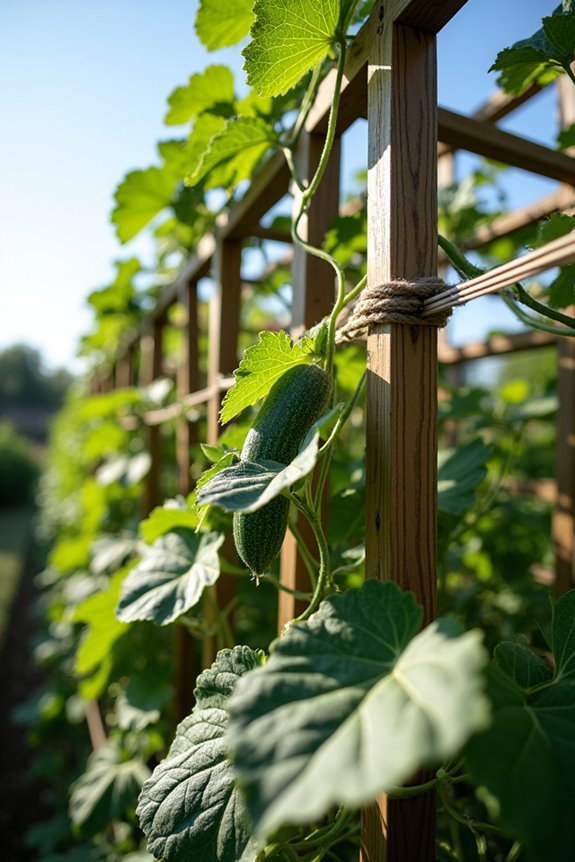
I learned the hard way that a 4-foot trellis won’t cut it for cucumbers—your vines will happily grow 6 feet or more, and trying to squeeze them onto something shorter just creates a tangled mess that’s tough to train and harvest from. When your trellis falls short, the upper portions of the vine don’t get enough sunlight and airflow, which means disease moves in faster and your lower leaves end up shaded (not ideal). I’d recommend aiming for at least 5–6 feet of height so your plants have room to climb without you wrestling them into submission every week.
Cucumber Growth Potential
Most gardeners I’ve talked to start with a 4-foot trellis and quickly discover it’s like buying shoes for a teenager—they outgrow it fast. Here’s what I’ve learned about cucumber growth potential: your plants will reach 6 feet or beyond if you let them, and that modest trellis height becomes a real problem.
When you undersized your vertical support, three things happen:
- Vines sprawl along the ground, inviting pests and disease
- Fruit hides in foliage, making harvesting frustrating
- You’re leaving serious yield on the table
The cucumber growth potential you’re missing is substantial. I’ve watched gardeners restrict their harvest by half simply because their trellis height couldn’t accommodate vigorous varieties. Your plants aren’t the problem—they’re actually doing exactly what they’re designed to do. You just need taller support to match their ambitions.
Vine Training Challenges
you’ll spend half your summer playing vine wrangler, constantly redirecting growth instead of just harvesting. I learned this the hard way.
When your vertical cucumber growth hits that ceiling early, you’re forced into constant vine training—guiding shoots down the opposite side, tying them sideways, basically improvising. It’s doable, but exhausting. An 8-foot trellis height eliminates this headache entirely. Your vines climb naturally without needing constant adjustments.
That said, shorter trellises work in tight spaces if you’re committed to frequent pruning and tying. Just know you’re trading convenience for space savings. The real lesson? Don’t undersize unless you genuinely have no other choice.
Adequate Height Requirements
Why do so many gardeners regret their 4-foot trellises by mid-July? I’ve learned the hard way that this height simply doesn’t cut it for vigorous cucumber varieties. Here’s what happens when you undersize your trellis height:
- Vines sprawl across the ground, inviting pests and disease
- Fruit hides beneath foliage, making harvesting frustrating
- Poor airflow reduces your harvest quality
For adequate height and vertical cucumber growth, I’d recommend going with 6 to 8 feet instead. Yes, it’s taller, but most cucumber varieties thrive at this trellis height. A 4-foot option forces you into constant maintenance—training wayward vines and fighting gravity. Trust me, spending extra on adequate height now saves you headaches later. Your back (and your cucumbers) will thank you.
Seasonal Maintenance and Inspection
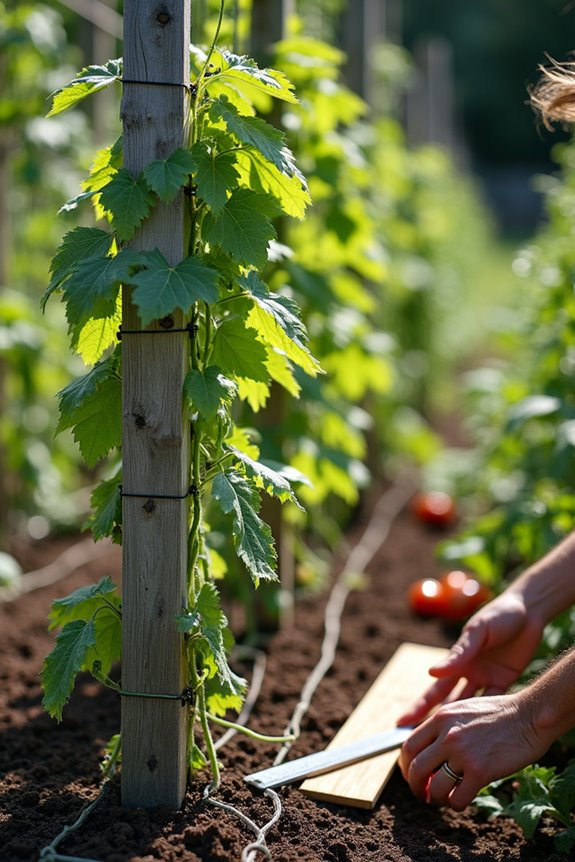
Regular upkeep is what separates a sturdy, productive trellis from one that collapses mid-August under the weight of your cucumber bounty. I’ve learned this the hard way. Weekly vine checks and adjustments keep your plants climbing properly instead of creating a tangled mess. As fruit sets, you’ll notice sagging—that’s your cue to tighten ties and redistribute weight. After storms, inspect your trellis stability immediately; I always check anchors first (trust me, prevention beats repair). Seasonal maintenance also means monitoring for cucumber beetles and powdery mildew, which can weaken both plants and structure. Spring demands re-securing ties to handle increasing fruit weight. Come fall, remove spent vines to reduce load. This seasonal maintenance and pest and disease management directly impacts your trellis height performance and longevity.